Weaving the New World: Saltillo Sarapes and Rio Grande Blankets from Old and New Mexico
On Display through March 2027
Wilson Art Gallery, The Legacy
Wednesday – Friday, 11 a.m. – 4 p.m.
This exhibition features the collections of Mark and Linda Winter and James H. Collins. It represents perhaps the most important textile collections within the United States documenting the blending of cultures in the Southwest and the enduring art forms the weavers created.
Among the greatest textiles created by mankind, the Classic Saltillo sarape holds a very prominent position. It is believed that the sarapes developed from a combination of highly skilled Indigenous labor with an eager market of rich northern Mexicans known as Creole Hacendados (wealthy landowners). From large estates that raised primarily horses, sheep, and cattle, the Hacendados’ livestock provided for large populations throughout Mexico, but the finely woven sarapes that developed were for a much more elite population.
The Saltillo sarape was a sophisticated combination of wool from the Spanish Churro sheep and the use of brilliant Indigenous dyes that produced incredibly long lasting colors. Churro sheep were originally brought to the Americas as a food source and were not known for quality wool. The favorable New World grazing and unique climate altered that. The most valuable dye material was cochineal, made from a scale insect unique to Mexico that produced pinks, reds, and purples. Cochineal also became the rage of Europe and the second most valuable export historically. Additionally, indigo was used as a native plant source in Mexico, and other parts of the world, that produced colorfast light to dark shades of blue and a vibrant green when combined with a yellow plant dye.
It is believed the sarapes were made by Tlaxcalan Indians in guild-controlled workshops although the identity of individual weavers is unknown. The Tlaxcalans aided Spanish explorer Cortez in the conquest of the great Aztec Empire and received special status, much more than any other natives in Mexico. The highly skilled Tlaxcalan weavers spent countless hours at the loom using thousands to millions of hand manipulations to create the fine and intricate sarapes. It is speculated that many of the textiles took up to two or more years to produce.
The loom technique used to weave Saltillo sarapes is known as weft-faced tapestry, where the wool weft completely conceals the fine hand-plied cotton warps. Saltillo sarapes were as beautiful as they were practical and were reportedly sold for high sums of money, especially valued by the elite of northern Mexican culture.
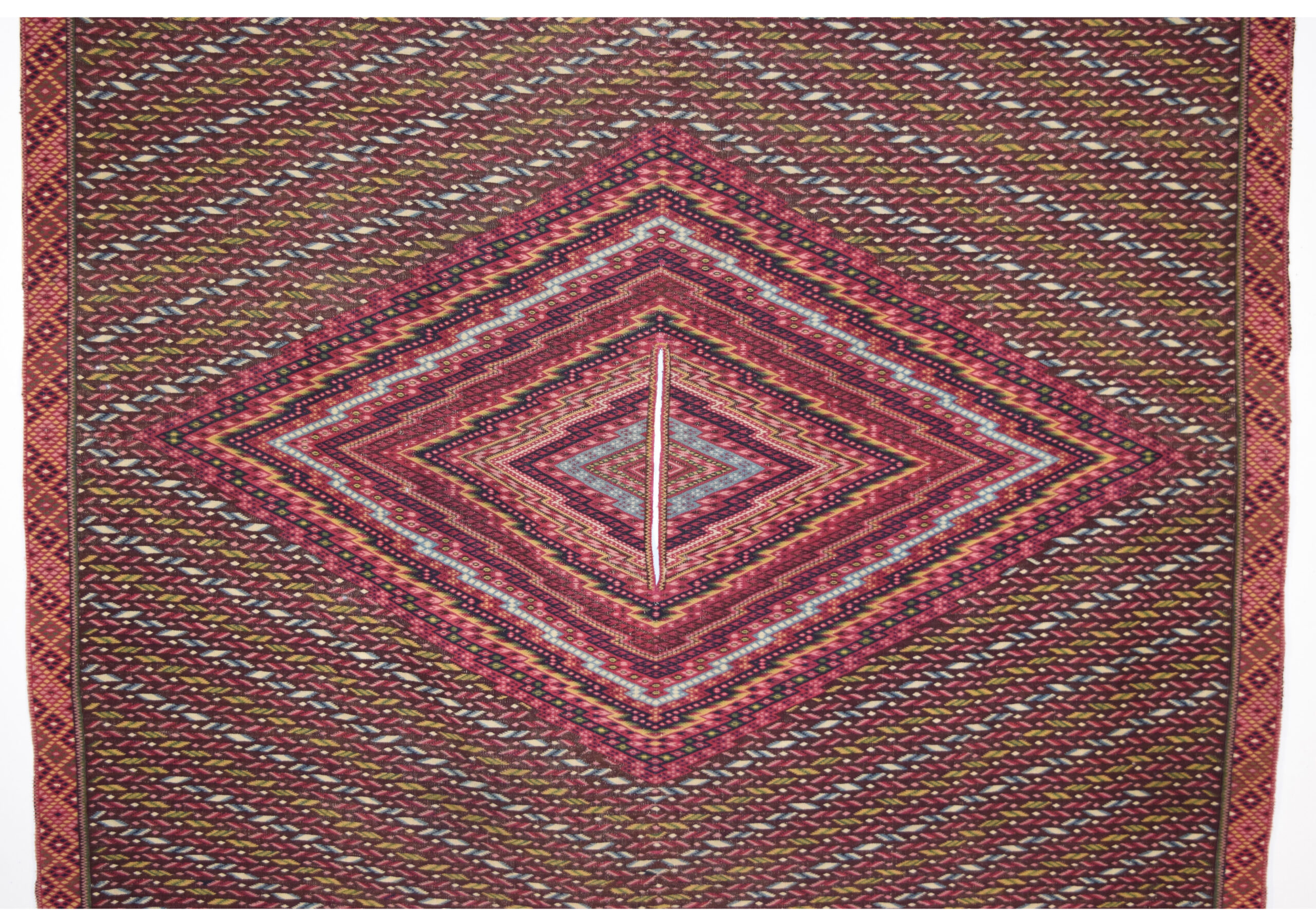
The standard textile size is approximately four feet in width and eight feet in length, sometimes woven in one panel but more often woven in two and then joined in the center. They usually contain a bocamanga (neck slit) so they could be worn either over the head as a poncho or draped around the body as a shawl.
The Saltillo sarapes seen in this exhibition are the result of an almost 50-year effort in locating and collecting quality examples in Mexico, the United States, Canada, and Europe. The gathering efforts included documenting each found example and establishing a large database. Much controversial insight seems to surround the sarapes, and very little is known about the individual weavers, their surrounding support, or circumstances. It is speculated that they were woven in small workshops located on individual haciendas and later in workshops throughout Mexico.
Although more information has been gathered in recent history, it remains unsatisfying, leaving more questions than answers. Offered here is what is believed to be the most concise information known, however much more remains to be learned. Examples have been sought out worldwide in both public institutions and private collections and carefully documented.
An attempt has been made to explain the various styles and to separate them into categories that best define them. Each new example located adds to the large base of information.
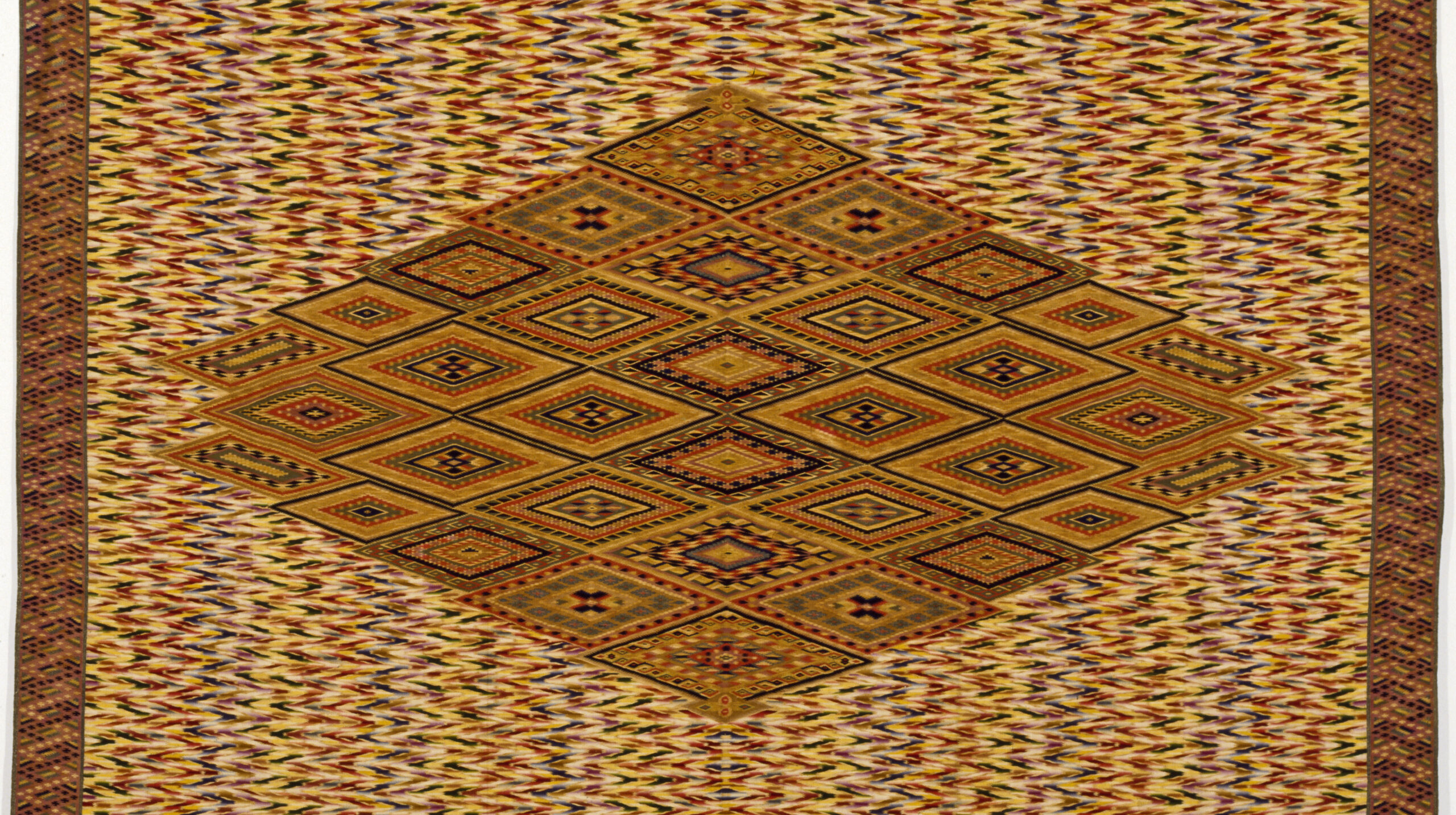
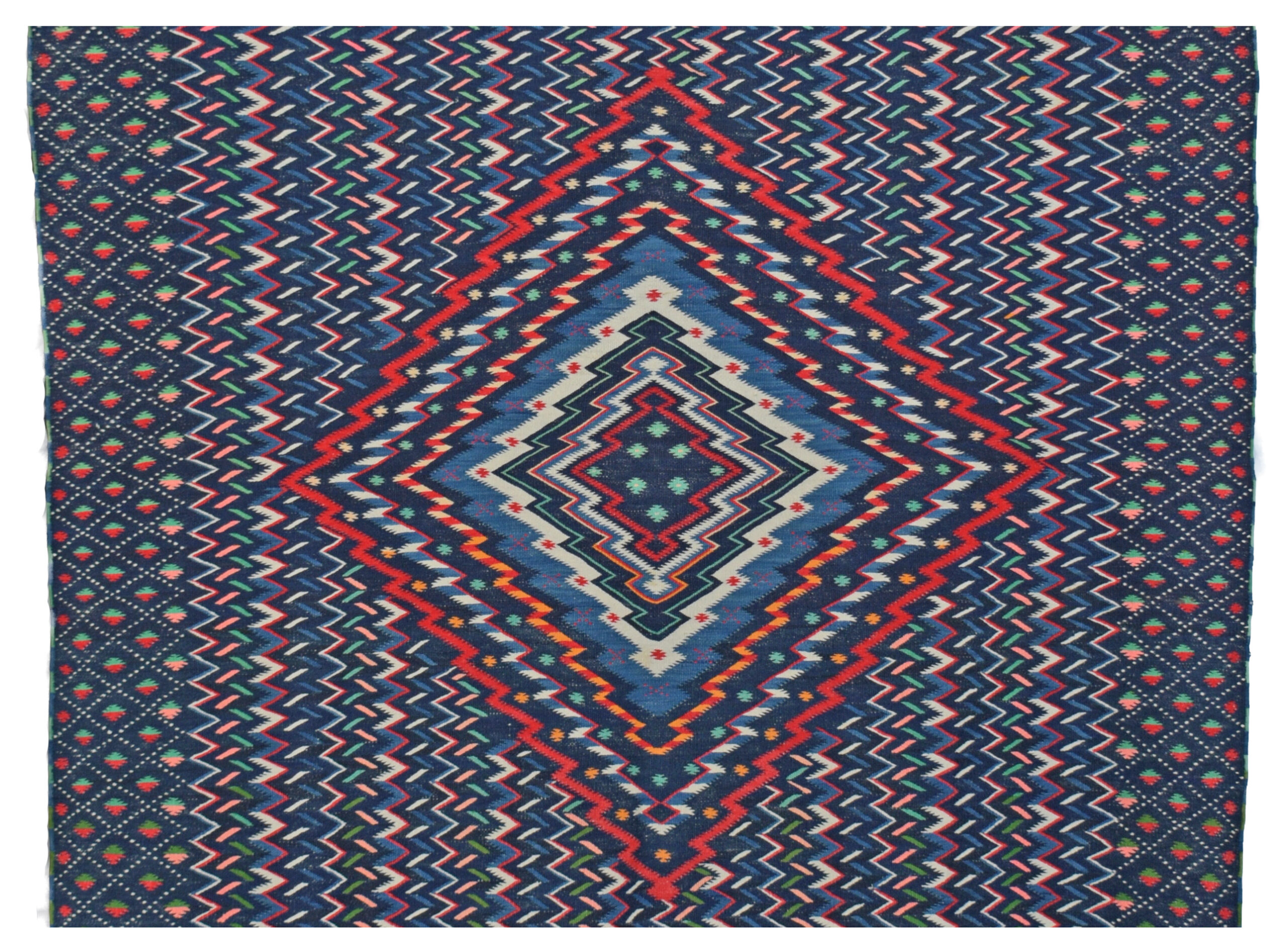
The Saltillo sarapes from the Classic style woven from approximately 1725 to 1825, are based on a distinctive three-part design system. Typically, the layout consists of an intricately designed central diamond or circular medallion superimposed over a large background field, which is usually surrounded by a narrow, finely detailed outer border. The central medallion and border are often similar in coloration as well as patterns. They frequently contrast with the field, which can range from a solid color with no design to spot-repeat or diagonal grid-like patterns to very complex, vertical mosaic designs.
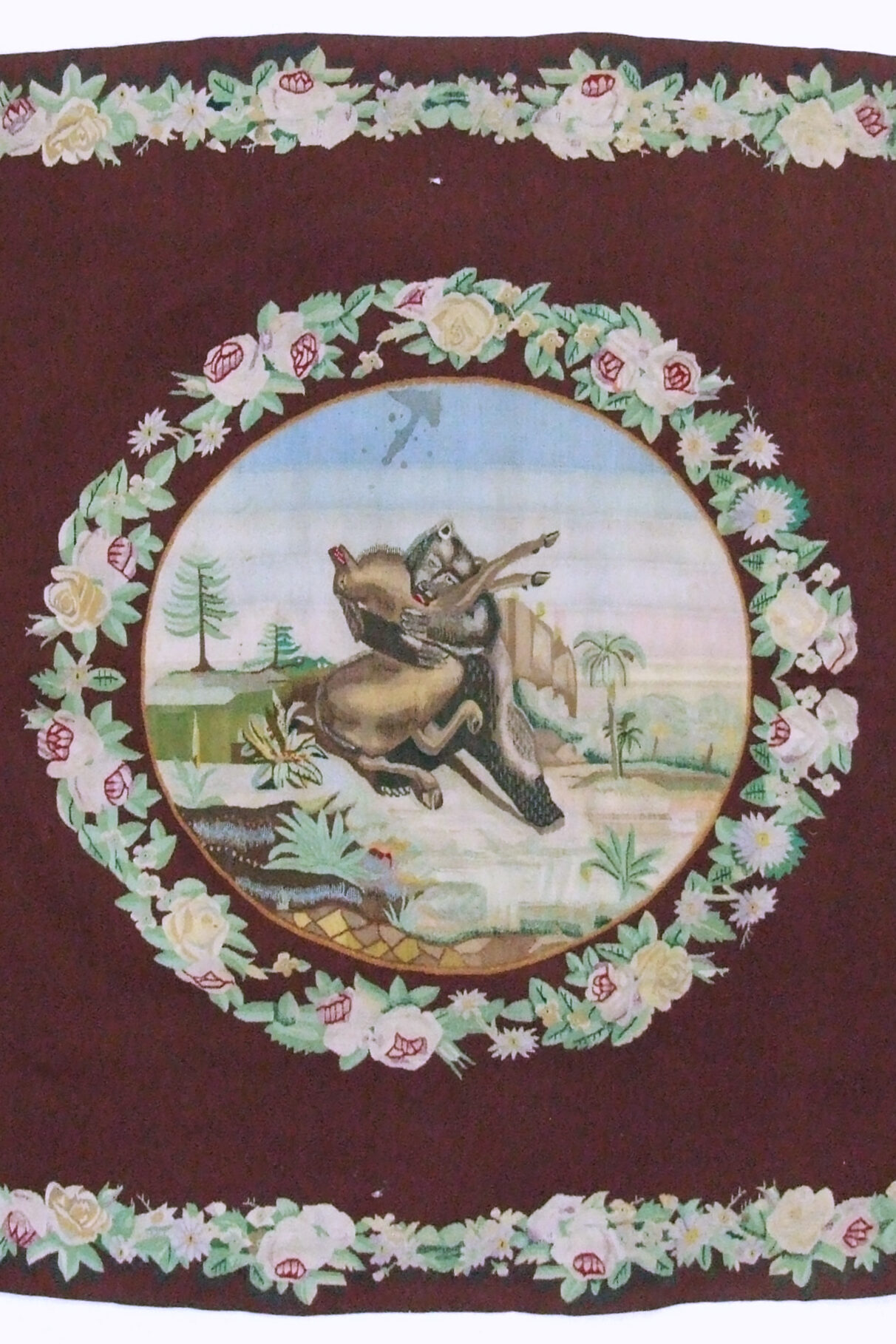
Sarapes from the Late Classic style, 1800 to 1860, demonstrate a broader design vocabulary; some resemble a simplified version of the older classics while others introduce new design systems and may include floral elements. The sarapes seen in this exhibition are divided into six styles, each accompanied by a detailed description and displaying variations of the types with numerous examples. The sections are divided by coloration, style, or dating.
From their obscure beginnings to their full development by the mid-18th century, the weavers established a very notable textile tradition.