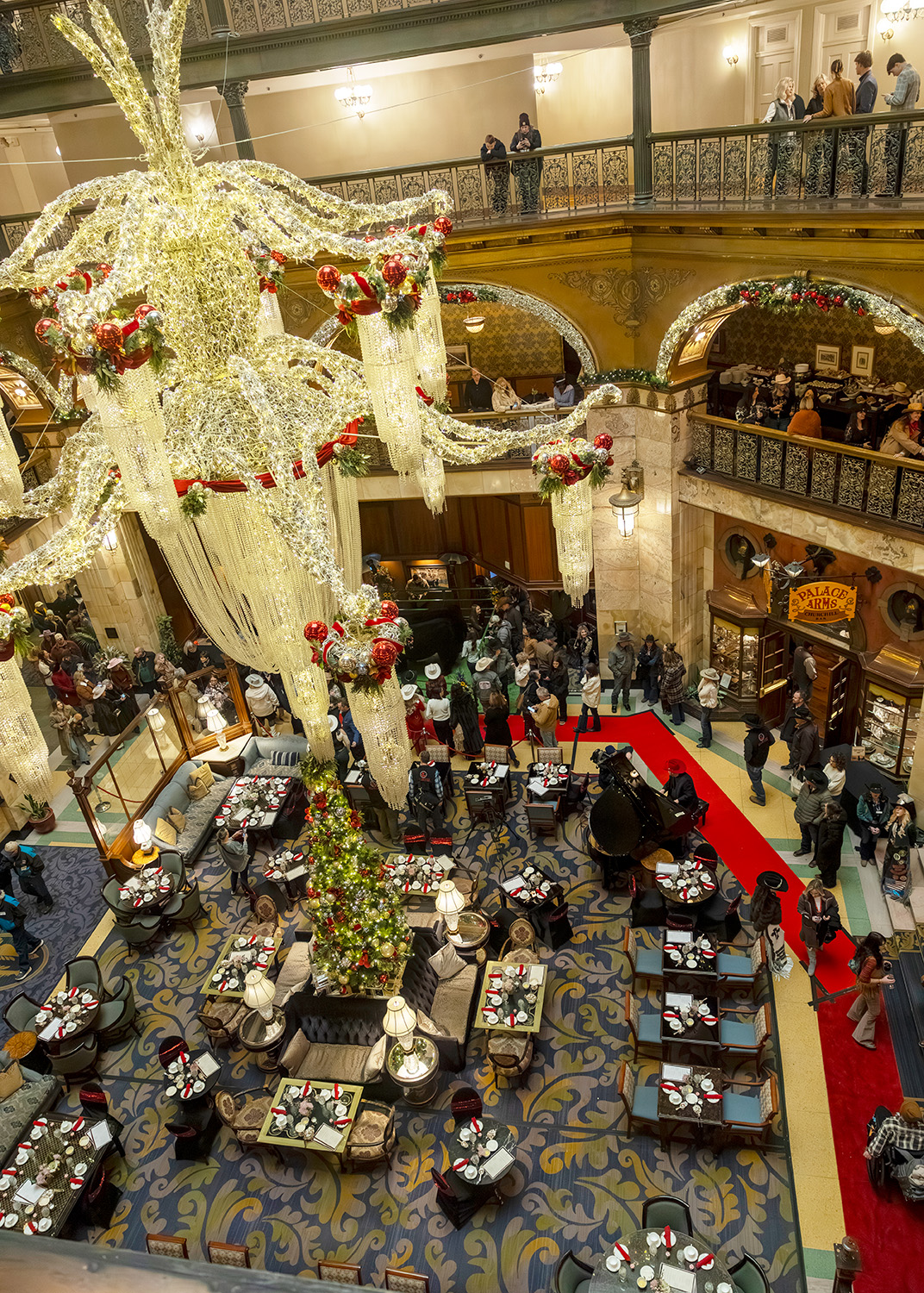
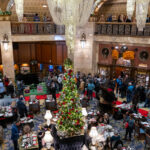
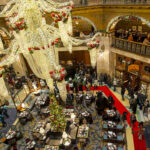
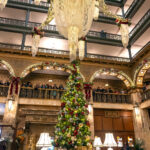
 The lobby of The Brown Palace Hotel is built to impress, with hand-crafted, polished marble, carved iron railings, and a chandelier that draws your gaze upward through seven stories of sheer architectural beauty. On most days, the historic, luxury hotel’s rhythm is predictable, from afternoon tea to guests checking in and out, to tourists stepping inside to take in its historical beauty. But during the National Western Stock Show, everything changes in a way that’s distinctly Denver.
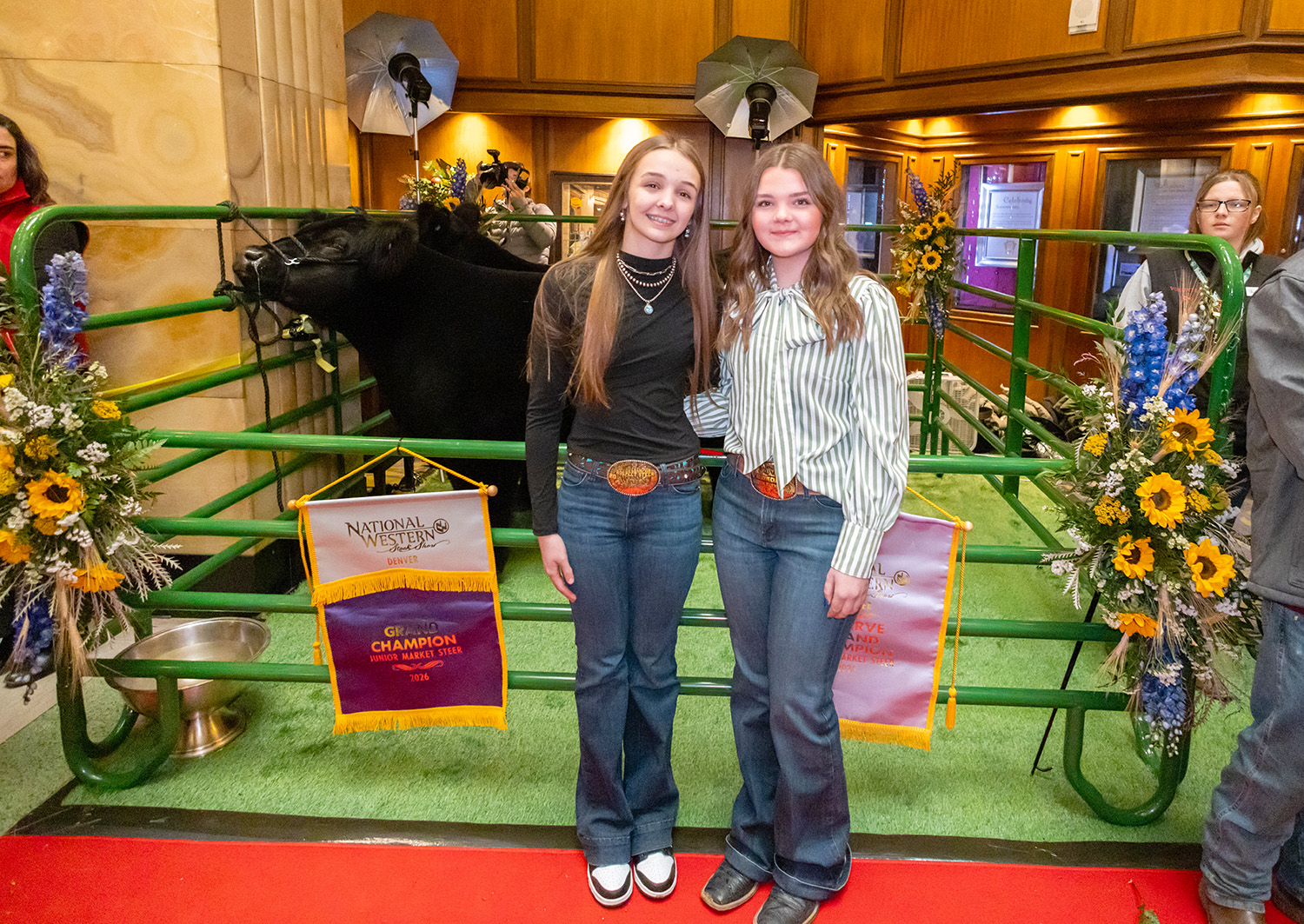
A red carpet runs through the center of the hotel’s lobby as the Grand Champion and Reserve Grand Champion Junior Steers are led swiftly through the back doors by their junior exhibitors. They move quickly past news reporters on a floor more accustomed to dress shoes than hooves.
It’s a sight you have to experience to believe: an over a thousand-pound animal walking down a red carpet in the center of a luxury hotel. Guests lean over the balconies and fill the edges of the floor, while others quickly stop sipping their tea to get a look at the sheer scale of the steer.
It is a striking collision of environments, but one that has been going on since 1945. The steers standing on bedding atop the marble floor are the result of months of hard work and one of the highest honors to come out of the National Western Stock Show, and their presence in the Brown Palace is part of a long-standing tradition that brings that agricultural achievement into the heart of Denver.
Where It All Started: A Mid-Century Tradition
Steer Day at The Brown Palace Hotel goes back to 1945, when two bulls owned by Dan Thornton sold for $50,000 each, a number that would land somewhere around $910,000 today. It was the kind of sale people talked about, even outside of the agricultural community. These conversations led to the idea of bringing the animals from the yards and auction blocks to the middle of the city.
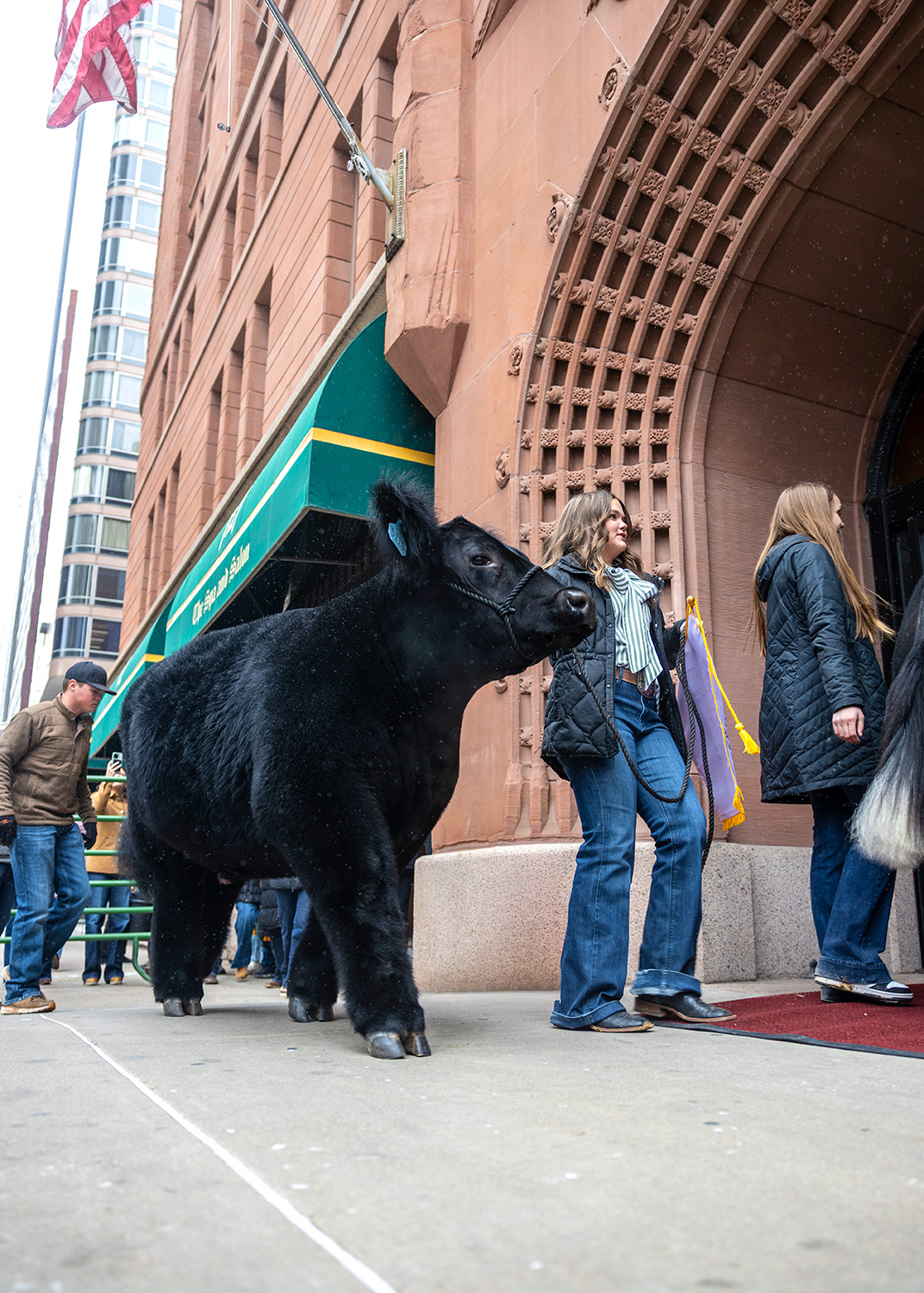
They walked straight into the lobby of The Brown Palace Hotel.
At the time, it was unexpected, maybe even a little bold, but it worked. People showed up. They stopped what they were doing. They paid attention. It was not just about seeing livestock in a hotel; it was about what that moment represented, putting agriculture on display in a place where people simply couldn’t ignore it.
What started as a one-time decision turned into something people came to expect, and then something the city claimed as its own.
Now, decades later, that same idea still holds. During the National Western Stock Show, the Grand Champion and Reserve Grand Champion Steers are brought through those same doors, continuing a tradition that has lasted because it still lands the way it did the first time.

2026 Standouts
The 120th National Western Stock Show brought together some of the most competitive cattle and junior exhibitors in the country, each entry representing a year or more of daily care and preparation leading into a single moment in the ring. The Grand Champion Steer, exhibited by Cannon Reimann of Ree Heights, South Dakota, stood out early and maintained that presence throughout the entire process. Named Boots for his distinctive markings, the Grand Champion Steer carried a steady composure through the Auction of Junior Livestock Champions, where it ultimately sold for $320,000 to Bank of Colorado, setting a new record and reflecting the level of commitment behind this program at the highest level.
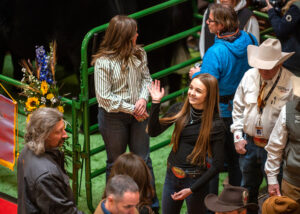
The Reserve Grand Champion Steer, exhibited by Hadlie Bell of Bristow, Oklahoma, followed with a similar sense of command. Her steer, Mile High, drew attention as soon as it entered the ring and held it all the way through to the auction ring, where it went on to sell for $125,000 to Ames Construction Company, tying a record and reinforcing the depth of quality across the top of the class.