Let’s Clear It Up.
If you’ve ever watched a rodeo and wondered what actually makes a horse or bull buck, you’re not alone. Rough stock events are some of the most recognizable parts of the rodeo at the National Western Stock Show, and they also come with a fair share of misconceptions.
We went straight to the source, the team at Cervi Championship Rodeo, longtime partners and stock contractors of the National Western Stock Show, to walk through how it all really works.
What is rough stock?
Rough stock refers to the bucking horses and bulls featured in rodeo events like saddle bronc, bareback riding, and bull riding. These animals are bred for performance, with bloodlines selected over generations for a strong natural instinct to buck and to do it well.
Cervi Championship Rodeo has been doing exactly that since 1967, when Mike Cervi purchased the company with a goal of providing quality stock for rodeo fans. Today, they’ve grown into one of the largest rodeo producers in the PRCA, with a herd that includes hundreds of horses and bulls and a breeding program built for long-term success. Their livestock regularly competes at the highest levels, including the National Finals Rodeo and the National Western Stock Show.
What actually makes them buck?
At the core, bucking horses and bulls are bred to buck and trained to excel in the rodeo arena.
These animals are developed over time, not rushed into performance. As Cervi owner Binion Cervi explains, “It takes a lot of time, nurturing, and a certain age for them to have the ability to perform.” Horses are typically around five or six years old before they begin bucking in rodeos, and they need additional maturity before competing on a stage like the National Western Stock Show.
What is a flank strap?
This is where most of the confusion tends to show up.
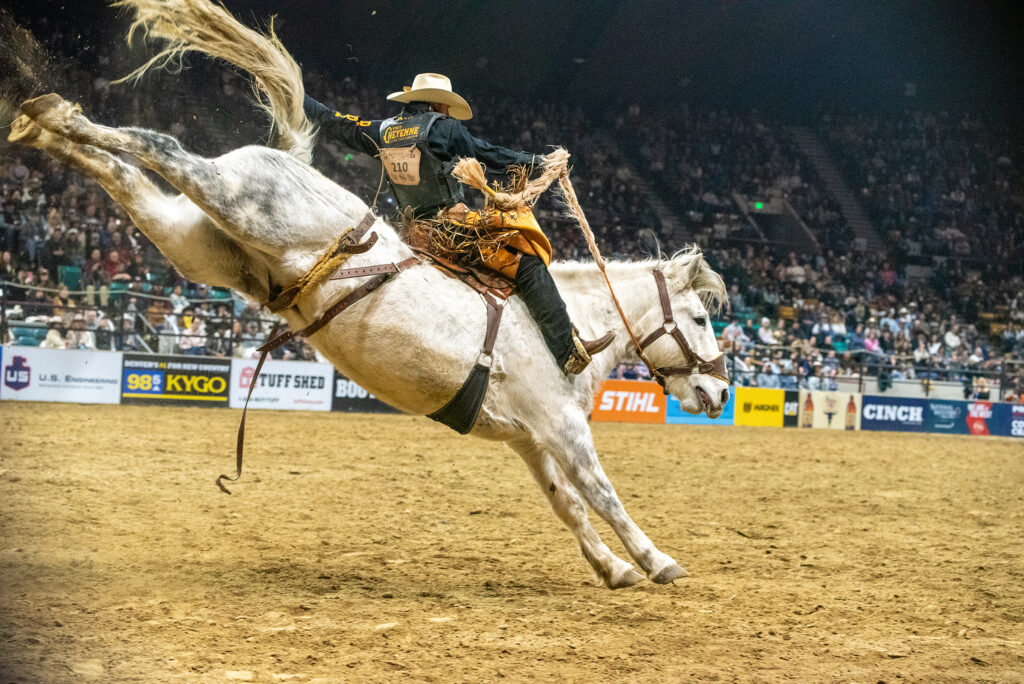
A flank strap is a fleece-lined leather strap placed around the animal’s waist. It’s used as a cue to encourage a buck, not as something that creates the behavior or causes pain.
“There’s a lot of misunderstandings about the flank strap,” Cervi says. “There’s a myth that they make a horse to buck, which isn’t true.”
He explains it in simple terms. “The flank strap is like a fly landing on your ear, and you hit it to make it go away. The horse wants to get it off of them, but it doesn’t hurt them.”
It’s also worth noting that many bucking horses are female, which clears up one of the more common myths about where and how the strap is placed.
Where does the flank strap sit?
On both horses and bulls, it sits around the flank area near the back of the body, well behind the ribs and away from any sensitive anatomy. If you put a flank strap on a human, it would land right around our armpits. Its placement is designed to encourage movement without restricting the animal.
Does the flank strap always make them buck?
No, and that’s an important distinction.
If an animal doesn’t have the natural instinct to buck, a flank strap won’t change that. Breeding programs like Cervi’s are focused on developing animals that already show the ability and desire to perform. If they don’t, they’re simply not part of the rodeo rough stock lineup.
What happens if an animal doesn’t want to perform?
It won’t, and there isn’t much anyone can do to change that in the moment.
These animals are powerful and independent, and their performance depends just as much on willingness as it does on physical ability. A horse that doesn’t want to buck isn’t going to buck and won’t be made to do so.
Do they like to buck?
Their environment and upbringing are built around letting those natural instincts show up.
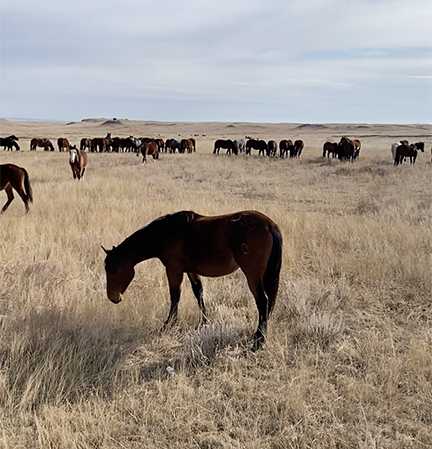
“They get to live on this ranch with tens of thousands of acres and just run, buck, and be free and just be horses,” Cervi says. That kind of setting gives them the space to move naturally, which plays a big role in how they develop. At the same time, they’re closely monitored by experienced folks who know them well.
“I spend more time with these horses than I do people,” says Riley Haug, Ranch Manager at Cervi Championship Rodeo. This daily interaction means each animal is accounted for and cared for in a consistent way, with attention to both health and behavior.
How often do they actually perform?
Far less than most people assume when they’re watching from the stands.
A typical Cervi bucking horse performs around 10 to 15 times a year, with each ride lasting a maximum of eight seconds. Over the course of a full year, that adds up to roughly 80 to 120 seconds of performance time.
Even over a long career that can stretch to around 20 years, the total time spent in the arena is measured in minutes, not hours.
“You have to cater to what your bucking horse needs,” Cervi says. “If you take care of them they’re going to take care of you at the rodeos.”
What do they do out of the rodeo arena?
Most of their lives are spent outside of the arena, moving freely across large pastures and developing naturally before they ever step into competition.
“For the first five years of their life, they get to run wild and not worry about us much,” Haug says. “We bring them in twice a year to deworm them, check on them, and be sure they’re okay.”
Cervi runs just under 900 head of horses, and each one is tracked and checked regularly. Their feeding program shifts with the seasons, with cobbed corn in the winter for added energy and warmth, oats during rodeo season, and protein-rich lick tubs available year-round.
Haug keeps a close count and a close eye on them daily, and that consistency makes it easier to catch any issues early and keep the herd in strong condition.
Looking Beyond the Ride
Great rough stock performance is the result of generations of selective breeding, careful management, and natural instinct. The flank strap may be the most talked-about piece of equipment in rodeo, but it’s only a small part of a much bigger picture.
What most fans don’t see is everything that happens outside those eight seconds. These horses and bulls are bred to do what they do, and when it’s time to perform, they do it naturally. The rest of the year, they’re out on large pastures grazing, roaming, growing, and simply being horses and bulls. Those long stretches between rodeos are just as important as the rides themselves, giving the animals the space, care, and nutrition they need to thrive.
When you understand what goes into raising rough stock, the ride itself looks a little different. Those eight seconds are simply the public moment in a lifetime of thoughtful breeding, dedicated care, and respect for the animals that make rodeo possible.