
The scene is JBS Foods in Greeley, a nationwide meat processing company. Dressed in hard hats, earplugs, safety glasses, white frocks, and warm boots, collegiate meat judging teams from across the country travel to the plant. With clipboards in one hand and a pencil in the other, the judges carefully study beef, pork, and lamb products. The meat judges are seeking out positive and negative attributes that will impact the public’s consumption of certain meat cuts. The Collegiate Meat Judging Competition in Greeley is one of several events that take place outside of the National Western Stock Show’s grounds, but is held in conjunction with the Stock Show each year.
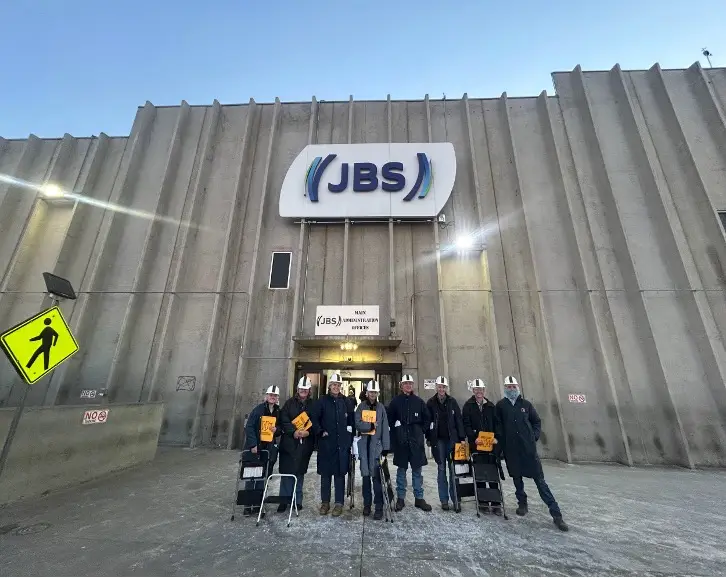
The purpose of collegiate meat judging is to teach young adults about what consumers should look for in meat products. Whether consumers are grocery shopping or visiting the local butcher, they must identify where the cut was made on the product, assess the muscularity, and read the label to determine quality. Consumers must also keep an eye out for any unwanted bone or fat remnants. By completing these steps, meat lovers can purchase the perfect product while making every penny worth it.
Meat judges determine if meat consumers are truly receiving the quality and yield that they are paying for.
Three priorities are evaluated in each animal: trimness, muscling, and quality. The order of importance depends on the animal type. The priorities in lamb and pork are trimness, muscling, and then quality. However, the priorities in beef are listed as quality, trimness, and then muscling. This is because beef products receive a grade set by the United States Department of Agriculture (USDA) based on yield and quality.
Meat judges learn how to evaluate trimness based on the amount of fat in certain areas of the cut. The thickness, fullness, or plumpness of a certain spot on a cut determines muscling. Unfortunately, if there is a lot of fat on a cut, it can be safe to assume that there is little real muscling, and any plumpness is simply fat.
The color, firmness, and texture of the meat determine quality. It’s also affected by marbling, which is the amount of intramuscular fat in a cut. For example, in a beef ribeye cut, the more marbling, the juicier, more flavorful, and more tender the meat will be. If that same ribeye is bright cherry red and firm, it will receive a high-quality grade from the USDA and will be priced higher.
Meat judges evaluate each cut according to the USDA guidelines, the same guidelines your local grocery store follows for its meat. There are standards for each animal specifying where the cut of a retail product must be to ensure maximum quality and consumer satisfaction. For example, certain bones must be removed from a specific cut of meat, while other bones must remain. Additionally, the cut on a retail piece of meat must be made in a specific way, or it is considered insufficient because the consumer would be losing product quantity. Each requirement depends on the animal. If a specification is incorrect, the student “calls” it or notes it on a testing sheet submitted to the official judges.
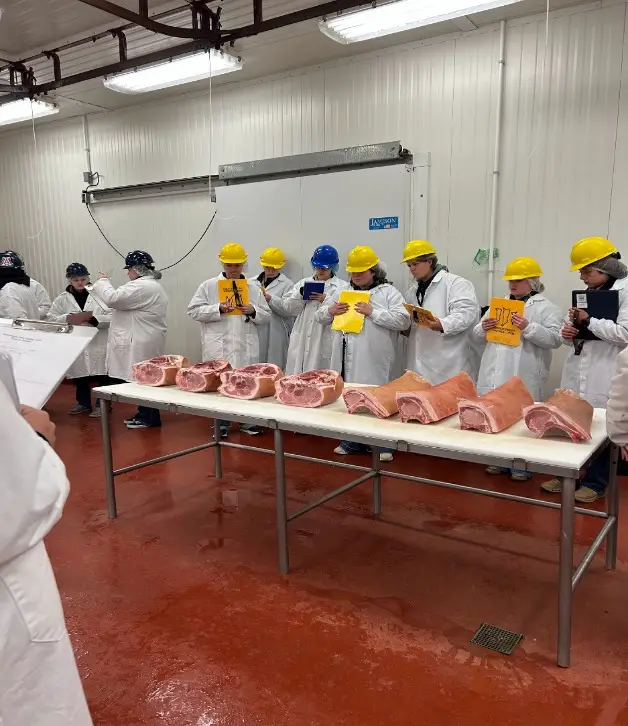
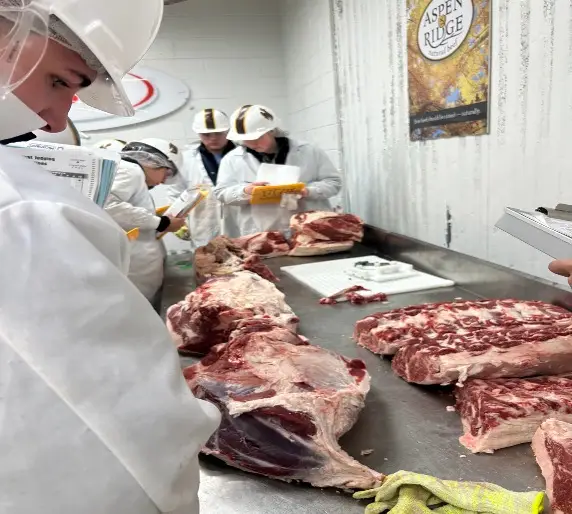
The collegiate judges arrive in Colorado early to get ready for the judging competition. Each team visits the plant for several practices. These practices are opportunities for the teams to polish their skills and knowledge by walking through the competition, evaluating meat cuts, and identifying specifications. After practices, the teams then enjoy the National Western Stock Show and the Mile High City.
The collegiate judging competition itself began at JBS Foods at 7:00 am on Sunday, January 18. Stations of carcasses, cuts, and specifications are set up around a cold room. The objective: to have the collegiate judge’s placings and calls align with the professional judge’s. After judging each class, the competitors must write individual essays called reasons. Reasons are detailed explanations about a class placement. The professional judges grade the students’ reasons based on how closely they match the true class placement. The competition concluded at approximately 2:00 pm.
On Monday, January 19, the collegiate teams celebrated with an awards ceremony. With the grand opening of The Legacy, the new world headquarters of National Western, the awards ceremony took place at the beautiful National Western Club.
The National Western Stock Show is dedicated to educating the youth interested in the agriculture industry. Through hosting the collegiate meat judging competition held in Greeley, National Western assists future agriculture leaders in acquiring valuable skills and lessons. Collegiate judges learn the values of teamwork, critical thinking, confidence, and decision-making under pressure. In addition, these judges are exposed to a vital part of the agriculture industry by learning how meat is processed and cut in accordance with USDA guidelines. Judges learn what consumers should be purchasing and why. Judges help meat lovers pick the perfect product.
Meat judging is a unique experience for college students of all ages, regardless of an individual’s chosen major, to acquire skills that will assist them in future employment opportunities. The National Western Stock Show supports students in discovering their passion in every aspect of the agriculture industry by hosting competitions such as collegiate meat judging and more.
The National Western Stock Show celebrated its 120th anniversary this year, with decades of agriculture education at the heart of its lasting mission. Regardless of background and knowledge, there is a place for everyone in the agriculture industry. We Are The West.

Written by:
Kyra Doud
2026 NWSS Marketing & Communications Intern
